At first, rummy looks simple.
A few players. A deck of cards. Rules that don’t seem too difficult.
But that impression doesn’t last very long.
Once you start playing more regularly, you begin to notice something—there are more decisions than you expected. And not just obvious ones. Small ones too. The kind you don’t always notice until they start affecting outcomes.
Which cards should you actually keep?
When is it better to drop early instead of pushing through?
And maybe the bigger one… are your decisions getting better, or just repeating?
These questions tend to show up early.
That’s where spinning101 starts to make sense. Not as a complicated system—but more like a way of looking at the game differently. Less about quick wins, more about understanding what you’re doing and why.
No hype here. Just trying to make things clearer.
What Spinning101 Really Means (Without Overcomplicating It)
In simple terms, spinning101 is about how decisions shape the game.
Rummy, especially in India, is generally considered skill-based. Which means outcomes don’t just depend on luck—they depend on what you choose to do with the cards you get.
And that’s where things shift.
Instead of thinking, “Did I win?”, the focus becomes:
“Was that the right move?”
It’s a small change in thinking. But over time, it changes how you play.
Why Rummy Keeps People Interested
There’s a reason people stick with rummy.
It’s not just the game itself—it’s how it feels over time.
Some people like the mental side of it. The need to remember, observe, adjust. Others just like that it’s consistent. The rules don’t keep changing. You can play, step away, come back, and still recognize the structure.
And slowly—without forcing it—you start noticing patterns.
Not just in the game… but in your own decisions.
If you want a broader breakdown of how these mechanics are structured across similar platforms, this spin to win how it works guide explains the flow in a more detailed way
Spinning101 Basics (Where Most People Start)
Before anything else, you need a basic understanding.
Not perfect. Just enough to avoid obvious mistakes.
Hand Formation (The Core of It)
Everything in rummy comes back to sequences and sets.
The tricky part isn’t knowing that—it’s deciding what to prioritize.
Sometimes you hold a card too long, hoping it fits. Sometimes you discard too early and regret it a few turns later.
That balance takes time.
Learning to Read the Table
Most beginners only focus on their own hand.
Which makes sense at first.
But eventually, you start noticing what others are doing. What they discard. What they pick up. What they seem to avoid.
That’s when the game opens up a bit more.
Timing Matters More Than It Looks
This one catches a lot of people off guard.
It’s not always about what you do—but when you do it.
Holding too long increases risk.
Dropping too early limits your options.
And somewhere in between… there’s a better decision.
You don’t always find it right away.
Decision Flow in Spinning101
Here’s something most beginners don’t realize immediately:
A good decision can still lead to a bad result.
And a bad decision can sometimes look like it worked.
That’s what makes things confusing at the start.
In spinning101, the goal isn’t to chase results. It’s to understand decisions over time.
The more consistent your decisions become, the less random the game feels.
Skill in Rummy (What It Actually Looks Like)
Skill doesn’t show up as big moments.
It shows up in repetition.
Making slightly better decisions. Avoiding the same mistake again. Recognizing when something isn’t working.
It’s not dramatic. It’s gradual.
And honestly… a bit subtle.
Common Beginner Mistakes (Everyone Goes Through This)
Most people make the same kinds of mistakes early on.
Holding risky cards longer than they should. Ignoring early drops. Playing through weak hands just to “see what happens.”
And then focusing only on whether they won or lost.
That’s normal.
Spinning101 isn’t about avoiding mistakes completely—it’s about noticing them earlier.
Why Structure Actually Helps
Playing casually is fine.
But if you want to improve, structure starts to matter.
Not in a strict way—just enough to notice patterns.
Looking back at past hands. Seeing where decisions repeat. Understanding what worked and what didn’t.
Without that, improvement feels random.
Spinning101 and Tracking (Why It Matters More Than You Think)
Tracking sounds complicated—but it doesn’t have to be.
Even simple notes can help.
Over time, you start seeing patterns:
You drop early more often than you think
You hold certain cards too long
You repeat the same decisions in similar situations
Without tracking, those patterns are easy to miss.
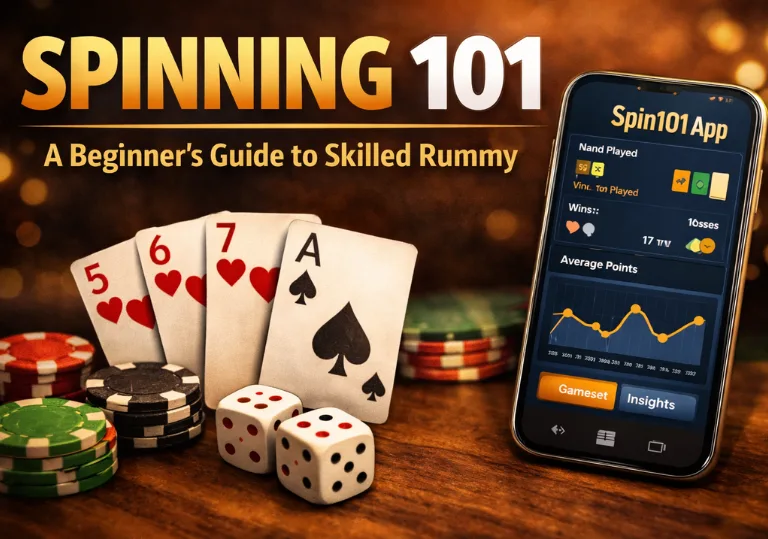
Tools like the Spin101 App help organize that information so you can actually look back and understand what’s happening—not just guess.
Measuring Progress (Without Overthinking It)
Progress doesn’t always show up clearly.
You won’t always see it in results.
Sometimes it’s just:
Fewer rushed decisions
Better timing
Less hesitation
Small things.
But they add up.
Different Skill Levels (And How the Game Changes)
Rummy doesn’t stay the same as you improve.
Beginners focus on rules.
Intermediate players start fixing mistakes.
More experienced players focus on consistency.
But the core idea—spinning101—stays the same.
Responsible Play (Something People Ignore Too Often)
Even skill-based games need balance.
Fatigue affects decisions more than people expect. So does frustration.
Taking breaks isn’t optional—it’s part of playing well.
Online vs Offline Rummy
Both versions have their place.
Online play is more structured. Easier to track. More consistent.
Offline play feels different—more social, less predictable.
Most players end up using both at some point.
Building Consistency Over Time
Consistency doesn’t come from playing more.
It comes from playing more carefully.
Short, thoughtful sessions usually help more than long, rushed ones.
Spinning101 is really about that—building habits you can actually maintain.
Using Spin101 as a Learning Tool
Spin101 works better as a reference than a scoreboard.
It helps you look back. See patterns. Adjust decisions.
Not instantly. But gradually.
And that’s enough.
For players who want to go beyond basics and refine their approach further, this spin winner strategies and tips guide offers deeper insights into improving decision-making over time:
What Spinning101 Is Really About
Not shortcuts.
Not guarantees.
Just understanding what you’re doing—and improving it over time.
That’s it.
Final Thoughts
Rummy is easy to start.
But understanding it properly takes time.
With the right approach—clear basics, steady play, and a bit of reflection—it becomes less confusing, and a lot more engaging.
Spinning101 is just the starting point.
What happens after that depends on how you play, how you learn, and how patient you are with both.
Frequently Asked Questions About Spinning101
Spinning101 refers to a beginner-focused approach that emphasizes decision-making, consistency, and skill development in rummy.
Yes. Rummy is widely recognized as a skill-based card game in India.
By learning the rules, reviewing gameplay, and focusing on decision-making rather than short-term results.
Holding risky cards too long, ignoring early drops, and focusing only on outcomes instead of decisions.
It helps track gameplay patterns, review decisions, and improve consistency over time.