Slot games used to be almost quiet in their simplicity, long before en spin became a term players talked about.
You pressed spin. The spinning reel turned. Something landed. You either nodded or shrugged and pressed again.
That was it.
Now, the structure feels layered. There are bonus paths, interactive screens, timed decisions. Some games even pause and ask you to choose. That’s where people start talking about skill-based slot games. And somewhere in those conversations, the term en spin shows up more often than it used to.
It sounds technical at first, but it isn’t.
It just means starting a spin.
But — and this is where things get interesting — the way you approach that moment can shape the entire session.
Not the math. The experience.
What En Spin Really Is (And Isn’t)
Let’s clear something up first.
When you activate en spin, the game’s random number generator makes its decision instantly. The spinning reel animation that follows? That’s presentation. The result is already set.
There’s no “perfect timing.”
No secret rhythm.
No memory of the last five spins.
Each spin stands alone.
I’ve seen players wait a few seconds before pressing the button, almost like they’re trying to feel the right moment. It feels meaningful. But technically, it isn’t.
Still… that pause can matter in a different way.
The Spinning Reel: What’s Actually Happening
Behind the graphics and sound effects, the spinning reel is just software doing what it’s programmed to do.
The system generates a random number. That number maps to symbol positions. The animation plays out. End of cycle.
The system has no awareness of previous results. A win doesn’t change what happens next, and ten losses in a row don’t either. The reel doesn’t “heat up,” and it doesn’t cool down. Each outcome stands on its own.
Probability resets every time.
Understanding that can feel disappointing at first. But it’s also clarifying. It removes myths from the picture.
And once the myths are gone, what’s left is behavior.
Where Skill-Based Slot Games Feel Different
Now this is where things shift slightly.
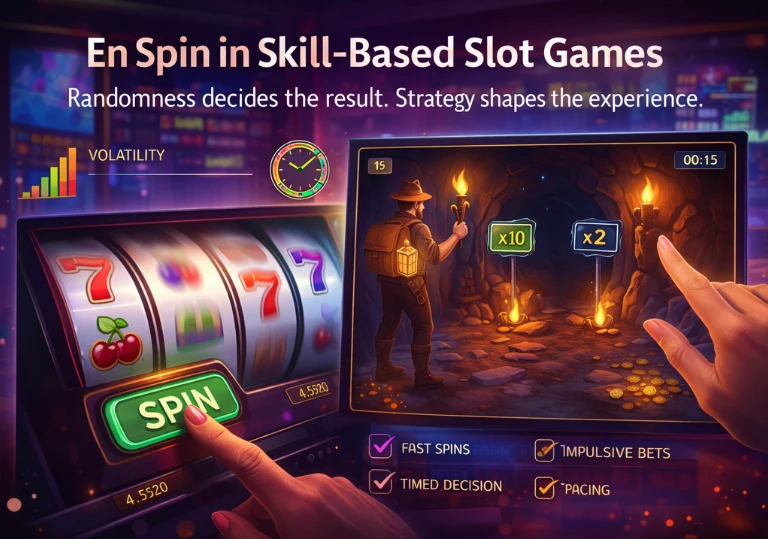
Skill-based slot games add interaction around the spin. A bonus round might let you choose between multipliers. In other cases, there’s a timed challenge to respond to. Sometimes you even guide a small character through a mini-game.
The spinning reel still determines when those features activate. That part remains random.
But once you’re inside certain bonus stages, your attention matters. If you rush, you might not respond well. If you’re focused, you might navigate it more cleanly.
It doesn’t eliminate risk or override randomness.
It just introduces moments where you’re not entirely passive.
And that subtle change alters how people feel about en spinning.
Strategy Lives Around the Spin, Not Inside It
This is the part people sometimes misunderstand.
Strategy doesn’t change the spinning reel. It doesn’t increase the odds of landing a certain symbol combination.
Where strategy actually lives is around the spin.
For example, bankroll decisions. If you’ve ever increased a bet after a few losses because you felt it was “time,” you’ve seen how quickly emotion can take over. On the other hand, deciding your spin size before you begin — and sticking to it — creates stability.
That stability doesn’t change probability. It changes momentum.
Volatility plays a role, too. Some games pay smaller amounts more often. Others stay quiet for longer stretches and then produce larger returns. Knowing which type you’re playing prevents that surprised feeling when the balance shifts more than expected.
It’s not about predicting outcomes. It’s about avoiding shock.
Many of these structured approaches are explained in more detail across the educational resources available on Spin101App.
The Pace of En Spinning
Here’s something that doesn’t get discussed much.
Speed.
Fast spins feel efficient. You get through rounds quickly. The session moves. There’s momentum.
But fast spinning also compresses awareness. Balance changes blur together. Decisions feel automatic.
Slowing down doesn’t influence the math. It simply gives your mind a second to register what’s happening.
Sometimes that second is enough to prevent a reactive bet increase. Or to remind yourself of the limit you set at the start.
It’s subtle. But subtle things add up.
Bonus Rounds and Attention
In skill-based slot games, bonus features are often where interaction lives. You may need to select from different options, respond to a timed prompt, or choose a specific path.
These decisions don’t control when the bonus appears. But they can affect how it unfolds.
If you’re distracted — maybe checking your phone — performance may drop. If you’re engaged, it may improve.
Again, this isn’t about guaranteed results. It’s about small efficiencies.
And small efficiencies, repeated often enough, become noticeable.
Misunderstandings That Stick Around
There are a few ideas that seem to persist no matter how many times they’re explained.
One is the belief that after several losses, a win becomes more likely. It feels logical. It isn’t how probability works in this system.
Another is the idea that stopping the reel at the “right” moment changes the outcome. It doesn’t. The result was locked in the moment en spin was activated.
And then there’s bet escalation. Increasing the wager increases potential exposure, not likelihood.
Once you internalize these points, the game feels clearer. Less mysterious. Less emotional.
The Psychological Layer
Skill-based elements can make slot games feel more immersive. That immersion can create a sense of participation.
Participation, however, isn’t the same as control over randomness.
It’s easy to speed up spins after a win because momentum feels good. It’s just as easy to increase bets after a loss because recovery feels urgent.
Structured limits exist for this reason.
Set them early. Respect them later.
It sounds basic. It works more often than people admit.
So, Can Strategy Increase Winning Potential?
It depends on how you define the phrase.
Strategy does not increase the probability of any individual spin. The spinning reel follows mathematical rules that don’t bend.
However, strategy can reduce unnecessary risk. It can extend session duration. It can improve performance during interactive features.
In that sense, it increases stability.
And stability is often mistaken for luck.
Final Thoughts
En spin is simple in definition. It starts the process.
The spinning reel follows probability. That remains constant.
What changes — especially in skill-based slot games — is how involved you feel during the session. There are moments of interaction. Moments of choice. Moments where focus matters.
The randomness stays the same.
The behavior around it does not.
And sometimes, when you step back and look at the whole session rather than a single spin, that distinction becomes clearer than expected.
FAQs
En spin is the action of starting a spin in a slot game. The system determines the result instantly through random number generation, and the spinning reel animation simply displays it.
No. The outcome is decided the moment the spin begins. Timing or stopping the animation does not change it.
No. The base game remains random. Skill elements usually apply within certain bonus rounds, not to the core spin result.
It does not change probability. It can, however, improve awareness and reduce impulsive decisions.
No. Strategy cannot guarantee outcomes. It supports structured, consistent play within a random system.