The phrase spin to win turns up in a lot of places.
On websites. Inside apps. In small tools, demos, and simple games. You tap a button, a wheel spins, it slows down, and an outcome appears. Most people instinctively understand what just happened, even if they’ve never paused to think about how the system works.
That familiarity is part of the appeal. It’s also where confusion starts. Some people associate the phrase with rewards. Others expect chance to play out in a very literal way. In reality, the mechanism is far more ordinary than the wording suggests.
Spin to win is best understood as a visual method for showing selection. It’s not dramatic, and it doesn’t promise anything on its own.
The Basic Meaning of Spin to Win
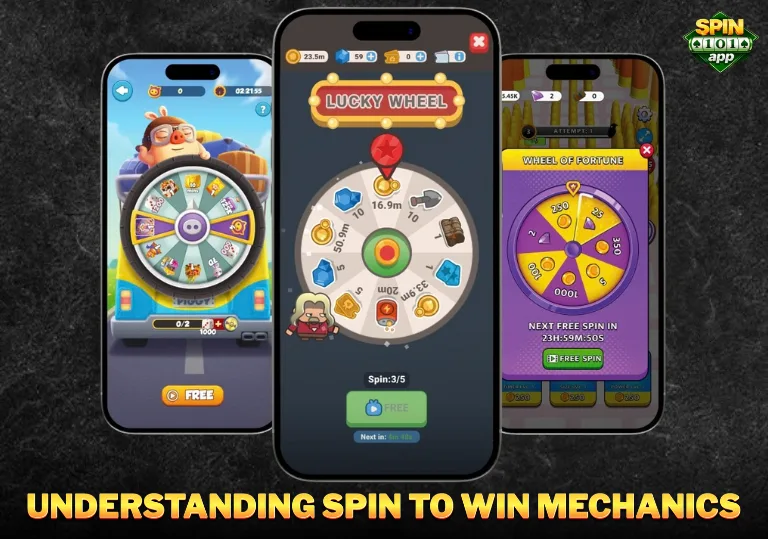
At its core, spin to win describes an interactive selection process.
A user initiates an action, usually by clicking or tapping. The interface responds with a spinning wheel animation. When the wheel stops, a predefined result is revealed.
That’s the entire loop.
The word “win” often causes misunderstanding. In many implementations, nothing is being won at all. The result might be a prompt, a category, a task, or a simple piece of information. The phrase remains popular because it’s familiar and easy to grasp, not because it accurately describes every outcome.
Where the Idea Comes From
Spinning selection tools existed long before digital interfaces.
Classrooms used spinners to pick students or topics. Board games used wheels to decide turns or movement. Group activities relied on spinning objects because they made randomness visible. You could see the process unfolding, which helped the result feel fair, even without control.
Digital systems borrow that same idea. The physical motion is replaced with animation, but the purpose stays the same. Show the selection process clearly, without friction.
How a Spin to Win System Works Behind the Scenes
The animation tends to draw attention, but the logic underneath is simple.
Before anything spins, the system already knows every possible outcome. These outcomes are defined in advance and stored internally. Each one follows specific rules about how and when it can appear.
When a user starts the spin, the system selects one outcome using its internal logic. In many cases, this selection happens almost immediately, before the wheel animation finishes playing. The animation then moves toward that result and stops there.
This is why it helps to separate visuals from mechanics. The wheel doesn’t decide what happens. It shows what has already been selected.
Is Spin to Win Actually Random?
That depends on how the system is designed.
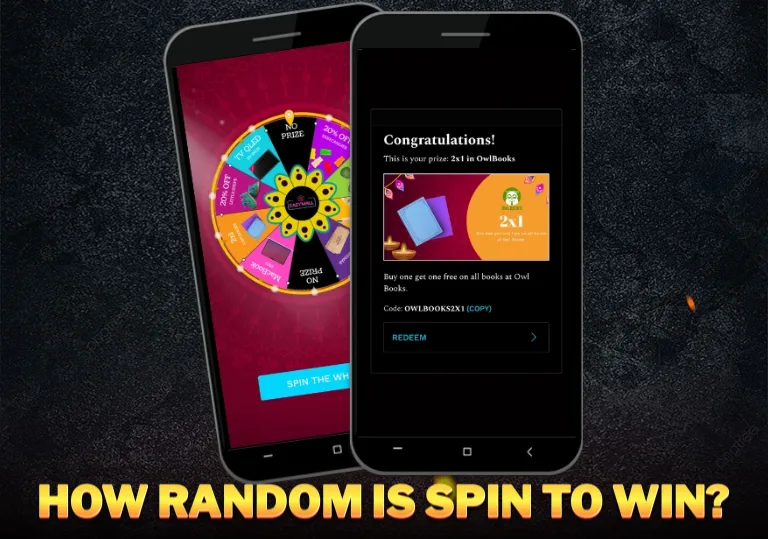
Most digital spin systems rely on pseudo-random algorithms. These algorithms simulate randomness while still operating within defined limits. From the user’s point of view, the result feels unpredictable. From the system’s point of view, it’s controlled and repeatable.
What matters more than the label “random” is clarity. A well-designed system explains what outcomes exist and how it handles them. Without that understanding, users may assume the wheel behaves in ways it doesn’t.
Why the Spinning Wheel Format Works
The spinning wheel persists because it aligns with how people process information.
Movement naturally draws attention, even when the stakes are low. Watching the wheel slow down creates anticipation, even if the outcome is minor. There’s also a sense of participation. The user doesn’t control the result, but initiating the spin still feels like involvement.
Another reason the format works is that it reduces decision pressure. Instead of asking users to choose from multiple options, the system chooses for them. In contexts where choice can feel overwhelming, that simplicity helps.
For a broader design perspective, an overview of spinning wheel gamification explains how spinning mechanics are commonly used to create engagement through anticipation rather than control.
Where Spin to Win Commonly Appears
Spin-based selection shows up in many practical, non-promotional environments.
In education, teachers use digital wheels to assign questions or topics. The process feels neutral and visible, which helps avoid bias. In onboarding flows, some platforms guide new users by randomly selecting a starting point, reducing decision fatigue.
Inside teams, wheels are sometimes used to rotate roles, assign tasks, or choose discussion prompts. In non-monetary games and simulations, the same mechanic helps illustrate probability in a way that’s easy to understand.
Platforms like the Spin101 app also use this spin-based selection approach, focusing on visual clarity and predefined outcomes rather than promises or guarantees.
Visual Design and System Logic Are Not the Same
One subtle detail often goes unnoticed.
A wheel may show equal segments even if some outcomes occur more frequently than others. In other cases, designers use uneven segments purely for readability or layout balance, even when probabilities are equal.
This doesn’t automatically indicate anything misleading. It’s usually a design decision. Still, it reinforces an important point. The animation explains the result, but it does not create it.
For additional context, a related spin-based interface reference looks at how spinning visuals are used to present predefined outcomes without user influence:
Where the Model Has Limits
Like any interface pattern, spin to win works best within certain boundaries.
It’s effective for low-stakes selection and simple demonstrations of chance. It’s less effective when decisions are complex or when users need detailed explanations. Overuse can also make the interaction feel repetitive or shallow.
Used thoughtfully, it supports clarity. Used everywhere, it loses impact.
Separating the Mechanic From Assumptions
It helps to strip away the extra meaning people often attach to the phrase.
Spin to win does not imply guaranteed outcomes, financial benefit, or skill-based advantage. Those ideas come from context and presentation, not from the mechanism itself.
At its simplest, it’s just a visual way to present selection and probability.
Frequently Asked Questions
No. The user initiates the action, but the system selects the result. Timing or skill does not influence what appears.
No. In many cases, the result is informational or procedural. The wording is often symbolic rather than literal.
Programmed logic usually generates these results by simulating randomness within defined rules.
Because visuals explain the outcome, they don’t create it. Design choices don’t always reflect probability.
Yes, when used for simple, low-stakes selection where clarity matters more than complexity.
Final Thoughts
Once you set aside the animation and phrasing, spin to win becomes easier to understand. It’s a design pattern, a familiar interaction, and a practical way to show outcomes without friction.
This approach also appears on platforms such as the Spin101 platform, where spinning visuals present predefined results clearly, without implying control, advantage, or guarantees.
Most of the time, that simplicity is exactly the point.